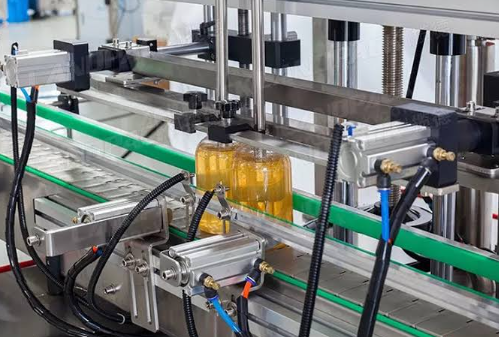
Thick, viscous products- sauces, creams, gels, honey, and similar formulations behave completely differently from thin liquids during filling, which means the gravity or simple pump systems that work fine for water-based products often struggle badly or fail outright with viscous products. This guide explains what makes a viscous liquid filling machine mechanically different from standard filling equipment, which filling technologies actually work for thick products, and what to evaluate before buying, so you avoid equipment that jams, underfills, or requires constant manual intervention.
Why Viscous Products Need a Different Filling Machine
Thick products resist flow under gravity alone, don’t move predictably through standard tubing and valves, and often trap air pockets that create inconsistent fill weights if the filling mechanism isn’t designed to account for them. A viscous liquid filling machine needs to actively force product into containers using mechanical pressure rather than relying on the product’s own flow characteristics, which is the core difference from filling equipment built for thin, water-based liquids. Industry bodies like PMMI, the Association for Packaging and Processing Technologies, regularly highlight this distinction when advising manufacturers on filling equipment selection for thicker product categories.
See also: About Datrihelminen Life
Main Types of Viscous Liquid Filling Machines
Piston Fillers
A piston-driven cylinder draws in and then forcefully dispenses a fixed volume of product per cycle, making piston fillers one of the most common and reliable choices for viscous products since the piston provides active mechanical force rather than relying on flow.
Pump Fillers (Rotary Lobe or Progressive Cavity)
Rotating mechanical components move thick products through the system, well suited to continuous, higher-speed filling. Rotary lobe pumps handle products with some particulate content, while progressive cavity pumps suit smoother, more delicate viscous products.
Auger Fillers for Semi-Solid Products
Used for very thick, semi-solid, or paste-like products that behave more like a solid than a liquid, an auger filler uses a rotating screw mechanism to move and dispense product by volume.
Pressure-Overflow Fillers
These combine pressurized product delivery with an overflow mechanism to achieve consistent fill levels in viscous products that would otherwise be difficult to fill accurately using standard overflow systems designed for thin liquids.
Comparing Viscous Filling Machine Types
| Machine Type | Best For | Fill Accuracy | Handles Particulates? |
| Piston filler | General viscous liquids, sauces, creams | High | Moderate (depends on particle size) |
| Rotary lobe pump filler | Viscous products with particulates | High | Good |
| Progressive cavity pump filler | Smooth, delicate viscous products | High | Limited |
| Auger filler | Semi-solid/paste products | Moderate-High | N/A (designed for semi-solids) |
| Pressure-overflow filler | Viscous products needing visual fill consistency | High for visual consistency | Limited |
Key Factors to Evaluate Before Buying a Viscous Liquid Filling Machine
Product Viscosity Range
Confirm the machine’s rated viscosity range covers your specific product, ideally by testing with an actual sample rather than a general product category, since viscosity can vary significantly even within similar product types due to temperature and formulation differences.
Particulate Content
If your product contains chunks, seeds, or other particulates, salsa, chunky sauces, or certain personal care products, confirm the filling mechanism can handle this without clogging, favoring rotary lobe pumps or appropriately sized piston fillers over progressive cavity pumps not designed for particulates.
Temperature Sensitivity
Some viscous products change consistency significantly with temperature. Confirm whether the filling system needs heating or cooling components to maintain consistent viscosity and fill accuracy throughout production.
Air Entrapment Management
Viscous products are prone to trapping air pockets, which can cause inconsistent fill weights or product quality issues. Confirm the machine includes appropriate air elimination or de-aeration features if this is a concern for your product.
Cleaning and Changeover
Thick products tend to leave more residue in filling equipment than thin liquids, so evaluate cleaning access and cleaning cycle time, particularly important for food-grade or multi-product lines requiring frequent sanitation. Manufacturers following FDA Good Manufacturing Practice guidelines should also confirm the machine’s cleaning design supports their required sanitation validation process.
Typical Viscous Filling Process
Product Hopper/Tank with Agitation Filling Mechanism -Piston/Pump/AugerAir Elimination/De-aeration- if needed- Container Filling- Fill Weight Verification- Filled Container Output
Fill weight verification is especially important for viscous products sold by declared net weight, since NIST weights and measures standards govern how closely actual fill weight must match the labeled amount in the US.
Common Buying Mistakes to Avoid
Assuming All “Viscous” Products Behave the Same
Viscosity isn’t a single fixed number; it can change with shear rate, temperature, and even how long a product has been sitting in a tank. A machine that performs well with one viscous product may struggle with another that’s technically similar but behaves differently under pressure. Always validate with your actual formulation rather than a general product category label.
Underestimating Cleaning Downtime
Because thick products leave more residue than thin liquids, operations that don’t account for cleaning cycle time in their throughput planning often end up with lower real-world output than expected. Factor realistic cleaning and changeover time into your capacity calculations from the start.
Choosing Based on Price Without Testing
A lower-cost viscous liquid filling machine that hasn’t been validated against your specific product can end up costing more in downtime, rework, and product waste than a higher-priced system properly matched to your formulation. Requesting a trial run with your own product sample before purchasing is one of the most effective ways to avoid this mistake. Machinery built to ISO safety and quality standards provides an additional baseline of confidence when comparing unfamiliar suppliers.
Choosing the Right Viscous Liquid Filling Machine for Your Line
Matching machine type to product characteristics is the single biggest factor in getting a viscous liquid filling machine that performs reliably at scale. Start by defining your product’s viscosity range, particulate content, and temperature sensitivity, then narrow your options using the comparison above before requesting a live demonstration with your actual product sample. A supplier’s willingness to test with your real formulation, rather than a generic viscous liquid, is one of the clearest signals of whether their equipment is genuinely suited to your production needs.