Food odors can quickly become one of the most frustrating problems inside a vehicle. Whether you regularly eat breakfast during your commute, transport takeout meals, carry groceries, or simply forget a food container in the back seat, strong smells can become trapped in upholstery, carpets, floor mats, air vents, and other interior surfaces. Unlike ordinary dust or dirt, food odors are caused by tiny odor-producing compounds that can remain behind even after the original source has been removed. Greasy foods, fried meals, seafood, dairy products, spices, onions, garlic, and spilled drinks can be especially difficult because their smells may penetrate soft materials rather than staying only on the surface.
The first step in learning how to remove car food odors is understanding that covering the smell is not the same as eliminating it. Air fresheners, scented sprays, and fragrance products may temporarily make the interior smell better, but they do not necessarily remove the source of the odor. Once the fragrance disappears, the original smell can return. A more effective approach combines source removal, thorough cleaning, ventilation, and odor absorption. With consistent attention, even a car that has developed a persistent food smell can become noticeably fresher.
Before applying any cleaning product or odor absorber, inspect the entire interior and remove anything that could be responsible for the smell. Check the center console, door pockets, seat-back compartments, cup holders, glove compartment, trunk, and areas underneath the seats. Food packaging can sometimes hide beneath seats or inside storage compartments for days without being noticed. A forgotten wrapper, half-empty drink, takeaway container, or grocery bag may continue producing odors long after you think the problem has been solved.
After take out all rubbish and inspect the floor mats and carpeting for crumbs or spills. Vacuuming is particularly important because small food particles can become lodged between seats or underneath mats. If a spill has occurred, simply removing the visible liquid may not be enough. Residue can remain inside fabric fibers and continue producing unpleasant smells. Carefully cleaning the affected area is therefore an important part of permanent odor removal.
Vacuuming is one of the simplest and most useful methods for improving the smell of a car interior. Food crumbs, dried sauces, seasoning particles, and other debris can collect in upholstery and carpeting where they are difficult to see. A powerful vacuum with suitable attachments can reach narrow spaces between seats, beneath the pedals, around seat rails, and along carpet edges. Pay particular attention to areas where passengers frequently eat or where children may have dropped snacks.
Remove the floor mats before vacuuming whenever possible. Shake them outside and vacuum both the upper and lower surfaces. Fabric mats can retain food particles and moisture, while rubber mats can collect sticky residues that contribute to unpleasant smells. Once the mats have been cleaned, allow them to dry completely before returning them to the vehicle. Cleaning the mats separately can make a surprisingly large difference because they are often exposed to food, mud, moisture, and other odor-producing materials.
Clean Fabric Upholstery Without Overwetting It
Fabric seats and carpets can absorb food odors more readily than hard plastic or vinyl surfaces. If food or a drink has spilled onto fabric upholstery, use an appropriate interior upholstery cleaner and follow the product instructions carefully. Apply enough product to clean the affected area without unnecessarily soaking the material. Excess moisture can create a separate problem if it remains trapped inside the upholstery.
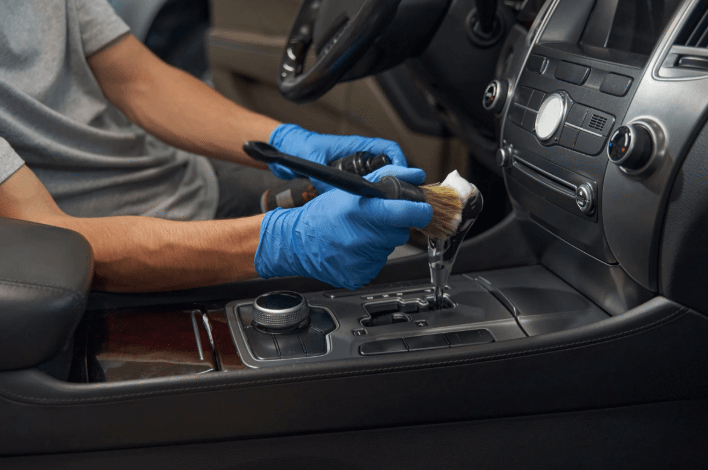
For a basic cleaning routine, gently work the cleaner into the stained or affected area using a suitable soft brush or microfiber cloth. Avoid aggressive scrubbing that could damage the fabric. After cleaning, remove excess moisture with a clean cloth and leave the vehicle in a well-ventilated area until the upholstery is completely dry. A damp interior can develop musty smells, so drying is just as important as cleaning.
Leather and synthetic upholstery generally absorb odors differently from fabric, but they can still collect greasy residues and food particles. Take extra care around seams, stitching, perforations, and cracks where small pieces of food can become trapped. Use a cleaner designed for the specific material rather than applying a household chemical that could cause discoloration or damage.
Wipe the surfaces gently with a suitable microfiber cloth and pay special attention to areas around armrests, center consoles, steering wheels, and door handles. These locations can collect oils and residues from frequent contact. After cleaning, use the appropriate conditioner if the manufacturer’s care instructions recommend one for genuine leather. Keeping these surfaces clean helps prevent food-related residues from becoming a continuing source of unpleasant smells.
Wash the Floor Mats and Dry Them Completely
Floor mats are among the most overlooked sources of car odors. Food particles, spilled beverages, grease, and moisture can become trapped in them, especially when passengers eat inside the vehicle. Removing and cleaning the mats gives you an opportunity to eliminate a significant amount of accumulated dirt and odor-causing residue.
The appropriate cleaning method depends on the material. Rubber and plastic mats can generally be washed with suitable soap and water, while fabric mats may require a fabric-safe cleaning product. Always follow the manufacturer’s instructions and avoid returning damp mats to the vehicle. Complete drying is essential because trapped moisture can create unpleasant musty odors that may be more difficult to eliminate than the original food smell.
Clean Cup Holders and Other Small Compartments
Cup holders are particularly vulnerable to food and drink spills. Coffee, soft drinks, sauces, milk, and other liquids can accumulate at the bottom or around the edges, creating sticky residues and persistent smells. Because cup holders are often deep and partially hidden, they may not receive enough attention during normal car cleaning.
Remove any removable inserts and clean them separately when possible. Wipe the surrounding surfaces with a suitable interior cleaner and use a small detailing brush or cloth to reach corners. The same principle applies to door pockets, center consoles, storage trays, and dashboard compartments. These small areas may appear clean at first glance but can still hold the residue responsible for an unpleasant smell.
Inspect Under the Seats and Inside the Trunk
When a food odor persists despite cleaning the visible interior, look underneath the seats. Food wrappers, crumbs, fruit, containers, and spilled beverages can easily become hidden in these areas. Moving the seats forward and backward can reveal spaces that are normally difficult to inspect. Use a flashlight if necessary and vacuum the exposed areas carefully.
Do not forget the trunk. Grocery bags, food containers, sports equipment, coolers, and other items can leave odors behind. If groceries have leaked, inspect the trunk carpeting and any removable lining. Cleaning these areas can be particularly important because smells from the trunk can circulate throughout the passenger compartment when the vehicle is being driven.
Use Baking Soda as an Odor Absorber
Baking soda is a commonly used household odor absorber and can be useful for certain car-cleaning situations. Rather than simply adding a strong fragrance, an odor-absorbing material can help reduce unpleasant smells over time. A small amount of baking soda can be placed in a suitable open container inside the vehicle and left for several hours or overnight, provided it is positioned securely and cannot spill.
For fabric surfaces, some people lightly apply baking soda before vacuuming, but care should be taken with vehicle-specific materials and manufacturer’s recommendations. The goal is to use it as part of an overall cleaning routine rather than treating it as a replacement for removing the original food residue. Once the absorption period is complete, vacuum the area thoroughly if any powder has been used on surfaces.
Improve Ventilation and Air Circulation
Fresh air is one of the simplest ways to help clear lingering food smells. After cleaning the interior, open the doors or windows in a safe location and allow fresh air to circulate through the vehicle. Good ventilation helps remove airborne odor compounds that remain after the source has been eliminated.
If weather and circumstances permit, ventilate the car for an extended period rather than closing it immediately after cleaning. You can also run the vehicle’s ventilation system according to the manufacturer’s recommended procedure. Avoid relying exclusively on recirculated air when trying to clear an odor, because continuously moving the same interior air may allow smells to linger.
Check the Cabin Air Filter
A persistent odor may sometimes involve the vehicle’s ventilation system rather than the passenger compartment alone. The cabin air filter helps remove particles from air entering the vehicle, and an old or contaminated filter may contribute to unpleasant smells. If the odor becomes noticeable whenever the ventilation or air-conditioning system is operating, checking the cabin air filter is worthwhile.
Replacement intervals vary between vehicles, driving environments, and manufacturers. Consult the vehicle owner’s manual for the recommended procedure and replacement schedule. If the filter is dirty, replacing it may improve air quality and reduce odors. However, a cabin filter should not be treated as the only solution if food residue remains inside the car.
Clean the Air Vents and Dashboard Areas
Air vents can collect dust and small particles that may contribute to stale smells. When cleaning the interior, gently wipe around the vents with a microfiber cloth or use an appropriate detailing brush to remove accumulated dust. Avoid pushing dirt deeper into the ventilation system.
The dashboard and surrounding surfaces should also be cleaned with products designed for automotive interiors. Food oils can settle on nearby surfaces, particularly if meals are frequently consumed in the front seats. Removing this residue helps create a cleaner interior and reduces the amount of material available to hold unpleasant smells.
Deal With Grease and Strong Food Residue Quickly
Greasy foods tend to create especially persistent odors because oils can adhere to upholstery and hard surfaces. Fried chicken, burgers, pizza, sauces, and heavily seasoned meals may leave residues that continue producing smells long after the food itself has been removed. When a greasy spill occurs, cleaning it as soon as possible is usually easier than waiting several days.
Blot liquid spills rather than aggressively rubbing them into the upholstery. Then use an appropriate cleaner for the affected surface. Always test a cleaning product on a small inconspicuous area first if the manufacturer does not provide clear compatibility information. Prompt action reduces the chance that the residue will penetrate deeper into seats or carpeting.
Avoid Masking Odors With Excessive Fragrance
Strong air fresheners can make a car smell pleasant temporarily, but using too much fragrance can create another unpleasant combination of smells. When a strong food odor mixes with a heavy artificial scent, the result may be more noticeable rather than less noticeable. Fragrance should therefore be considered an optional finishing touch after cleaning, not the primary odor-removal method.
A cleaner approach is to remove the source, clean contaminated surfaces, vacuum thoroughly, and ventilate the interior. Once the underlying odor has been reduced, a mild fragrance may be used if desired. Keeping the fragrance subtle can also make it easier to identify any remaining problem areas.
Prevent Food Odors From Returning
Prevention is easier than repeatedly dealing with strong odors. If you regularly eat in your vehicle, keep food containers sealed and remove packaging as soon as possible. Avoid leaving takeaway bags, cups, leftovers, or grocery items inside the car overnight. Even foods that do not initially smell strong can develop unpleasant odors as they warm up.
Using washable containers and keeping a small rubbish bag in the vehicle can also make cleanup easier. If something spills, address it promptly instead of allowing it to dry into the upholstery. Regular vacuuming and interior cleaning can prevent small food particles from accumulating in hard-to-reach areas.
Build a Simple Car Cleaning Routine
A consistent cleaning routine can keep food odors from becoming a major issue. Once a week, inspect the seats, floor, cup holders, storage areas, and carpeting for crumbs and spills. Remove rubbish and vacuum the interior regularly, especially if the vehicle is frequently used for meals or family transportation.
A deeper cleaning can be performed periodically depending on how heavily the car is used. This may include washing floor mats, cleaning upholstery, wiping hard surfaces, inspecting under the seats, and checking the cabin air filter according to the manufacturer’s schedule. Regular maintenance makes odor removal easier because residue does not have enough time to build up.
See also: Behind the Username Bustykelly48ff Explained
Know When Professional Interior Cleaning Is Worthwhile
Some food odors are difficult to eliminate at home, especially when a large quantity of liquid has penetrated deep into carpeting, seat foam, or other interior materials. If an odor remains after the visible source has been removed and the interior has been thoroughly cleaned, professional detailing may be worthwhile. Professional cleaners have specialized equipment that can help address deeply embedded dirt and odors.
This can be particularly useful after spills involving dairy products, seafood, meat, or strongly seasoned foods. If moisture has entered beneath carpeting or into areas that are difficult to access, professional attention may also help prevent long-term problems. Choosing an experienced automotive detailing service is generally preferable to repeatedly applying stronger household chemicals.
Keep Your Car Fresh With Better Everyday Habits
Learning how to remove car food odors is ultimately about treating the source rather than simply covering the smell. Removing leftover food, vacuuming thoroughly, cleaning spills, washing floor mats, wiping hard surfaces, ventilating the cabin, and maintaining the ventilation system can work together to restore a fresher interior.
The best results usually come from acting quickly. A small spill or forgotten food container is much easier to deal with before the odor has time to penetrate fabrics and carpets. By combining regular cleaning with simple prevention habits, you can maintain a cleaner and more comfortable vehicle while reducing the need for strong fragrances or repeated intensive cleaning.