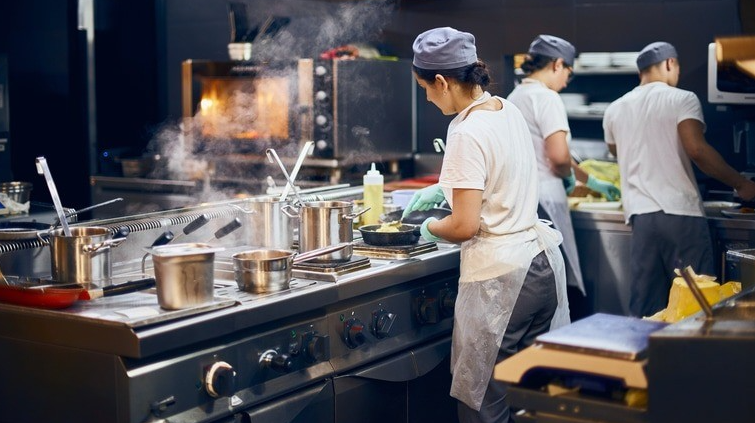
Australian hospitality businesses are being forced to replace commercial kitchen supplies faster than standard lifecycles recommend due to rising maintenance costs. The change is a reflection of greater economic constraints that are changing national equipment buying policies.
The market for commercial kitchen appliances is expanding quickly in Australia. Industry research indicates that the market will develop at a compound annual growth rate of 7.17%, reaching AUD $2.6 billion by 2033 from AUD $1.3 billion in 2024. This expansion is accompanied by increasing financial difficulties. Since 2021, energy prices have increased by 22% in Australian markets. These days, the yearly maintenance expenses for each hospitality property fall between $2,000 and $5,000.
Market Growth Amid Financial Pressures
The market for commercial kitchen appliances in Australia is expanding quickly. Growth is expected to reach AUD $2.6 billion by 2033 from AUD $1.3 billion in 2024, according to industry data. A compound annual growth rate of 7.17% is therefore represented.
Nonetheless, increasing operational demands correlate with this growth. Since 2021, energy prices in Australian markets have increased by 22%. The current annual maintenance costs for each hospitality location are between $2,000 and $5,000.
Café and restaurant proprietors have to make tough choices. Five to seven years is all it takes to replace equipment that used to last ten to fifteen years. Repair vs replacement math has undergone a fundamental shift.
The Cost Reality Facing Hospitality Operators
Maintenance expenses are climbing across all equipment categories. Commercial refrigeration repairs typically cost between $200 and $800 depending on fault complexity. Labour rates add substantial expense to these figures.
Minor fixes command $100 to $250. Mid-level repairs range from $200 to $400. Major overhauls can exceed $700 in labour costs alone.
These figures represent only immediate costs. The hidden expenses often prove more damaging. Stock spoilage during equipment downtime can cost thousands. Service disruptions harm customer relationships and revenue streams. Emergency repairs during peak periods command premium rates.
Wider ramifications are revealed by industry statistics. The 2023 Global Foodservice Equipment Procurement Report states that 35% of yearly procurement expenditures are spent on equipment replacements and breakdowns brought on by poor maintenance. Operators in all segments are impacted by this financial burden.
The issue is exacerbated by energy inefficiency. In Australian kitchens, older refrigerators use a lot more electricity. During service times, ambient temperatures frequently rise to 35 to 40 degrees Celsius. After under-bench refrigeration units from 2012 were replaced with more contemporary models suitable for high ambient temperatures, recent operational data from Melbourne hospitality venues showed a 40% reduction in electricity use.
The transition to energy-efficient commercial kitchen supplies has become an economic imperative rather than an environmental preference. Operators calculate return on investment measured in months rather than years for certain equipment categories.
Equipment Replacement Cycles Are Accelerating
Traditional equipment lifecycles assumed proper maintenance and moderate use. Commercial fridges and freezers were expected to last 10 to 15 years. Ovens and ranges might serve reliably for eight to 15 years. Dishwashers in casual dining settings typically ran for a decade.
Current data tells a different story. Replacement cycles now average five to seven years across most equipment categories. Quick-service restaurants experience even shorter lifespans due to intensive use patterns. In mature commercial properties throughout Australia, replacement cycles have settled at seven to nine years according to market intelligence.
Key Drivers:
- Parts availability has become unreliable for older models
- Manufacturers discontinue support for equipment more quickly
- Compliance requirements change around gas and electrical standards
- Equipment that met regulations a decade ago may not satisfy current codes
Technology obsolescence plays an increasingly important role. Equipment lacking modern efficiency features becomes economically unviable. The gap between old and new performance metrics widens each year. A 10-year-old commercial oven might consume twice the energy of a current model while delivering inferior results.
Supply chain considerations have also influenced replacement timing. Lead times for commercial-grade equipment now run 12 to 16 weeks for popular models. This represents an increase from the historical six to eight weeks. Forward-thinking operators are planning replacements well in advance of anticipated failures.
See also: Life and Achievements of Bessatafa Futsumizwam
The Smart Technology Transition
Advanced equipment capabilities are becoming increasingly important to operational resilience. By 2026, 74% of operators favor equipment with incorporated IoT diagnostics, according to industry analysis.
Australian commercial kitchens are adopting smart technology at a faster rate. IoT-enabled refrigeration keeps an eye on temperature variations and warns employees of possible problems before they happen. In order to plan servicing during slow times, predictive maintenance systems examine usage trends. Automated cooking methods preserve uniformity while lowering labor costs.
Energy efficiency remains the primary driver for many operators. Modern equipment with ENERGY STAR certification or equivalent Australian standards can reduce utility bills substantially. Induction cooktops are replacing gas ranges in cloud kitchens due to instant temperature response and reduced ambient heat. Cloud kitchens hold a 12.8% market share in 2025.
The return on investment timeline varies by equipment type. With utility savings alone, energy-efficient upgrades for units older than eight years frequently pay for themselves in two to three years. The business case is significantly strengthened when lower maintenance costs and increased dependability are taken into account.
Suppliers like Complete Wholesale Suppliers indicate a rise in demand for technology that combines advanced monitoring capabilities with efficiency. Operators’ increasing sophistication in assessing total cost of ownership rather than concentrating only on acquisition costs is reflected in the market change.
Making the Repair Versus Replace Decision
Hospitality operators need clear frameworks for equipment decisions. Age alone doesn’t determine whether repair makes sense.
Repair Makes Economic Sense When:
- Equipment is under eight years old and in generally good condition
- The fault is minor such as a worn door seal or faulty thermostat
- Repair costs remain well below half the replacement cost
- The unit has a solid maintenance record
Replacement Becomes the Smarter Choice When:
- Equipment exceeds 10 years old and parts are scarce or expensive
- Breakdowns occur frequently creating operational disruptions
- Energy bills continue climbing due to inefficiency
- Major component failures approach the cost of new equipment
- Current units fail to meet updated compliance standards
Total cost of ownership provides the most accurate comparison. The formula considers acquisition costs and energy consumption over expected lifespan. It also includes ongoing maintenance and potential downtime losses. A cheaper initial purchase price often masks higher lifetime costs.
Australian Market Outlook and Strategic Planning
The Australian market for commercial kitchen appliances is still changing. By 2026, Electrolux wants to introduce a new line of environmentally friendly appliances in Australia. The range was created in Italy with €328 million from the European Investment Bank, with a focus on digital innovation and energy efficiency.
The demand for modular equipment appropriate for cloud kitchens and smaller venues is being met by regional producers and distributors. The use of electric fryers and induction cooktops is increasing due to the phase-out of gas appliances. Smaller commercial kitchens in urban areas are a reality that is addressed by space-saving equipment.
Industry forecasts project the Australian commercial cooking equipment market will grow from USD $178.3 million in 2023 to USD $307 million by 2030. This represents substantial opportunities for operators who plan strategically. Tourism recovery continues driving demand across the hospitality sector. Australia welcomed 3.7 million visitors in 2022 according to United Nations World Tourism Organisation data.
Financing options have expanded to ease capital pressure. Rent-try-buy programs allow operators to test equipment before committing to purchase. Equipment leasing preserves working capital for other business needs. Buy now and pay later schemes accounted for 40% of commercial appliance payments by value in 2024.
Procurement strategies are also shifting. Complete Wholesale Suppliers and similar distributors report increased interest in certified used equipment alongside new purchases. This dual-inventory approach provides financial flexibility for venues working within tight capital constraints.
Practical Recommendations
Regular equipment audits should be carried out by operators to find units that are nearing the end of their useful lives before they fail. Schedule preventive maintenance, usually every six to twelve months. Instead of concentrating just on the purchase price, consider the entire cost of ownership. With current lead times, schedule equipment replacements 12 to 16 weeks in advance. For any equipment older than eight years, think about energy-efficient models.
Conclusion
Australia’s market for commercial kitchen products will continue to change. Challenges include shortened replacement cycles and growing maintenance expenses. Additionally, they provide doors for operators that make strategic plans and invest in effective machinery.
Decisions on equipment have a direct effect on profitability and operational robustness. Today’s infrastructure expenditures will play a role in the recovery trajectory of the hospitality industry. In a market that is becoming more and more competitive, operators who view kitchen equipment as strategic assets rather than fixed expenses position themselves for long-term success.
The objective is still clear: operational resilience via proactive planning and well-informed equipment selections. Data-driven decision making distinguishes successful businesses from those grappling with growing expenses and malfunctioning machinery as market dynamics continue to change.