Choosing Among Metallic Epoxy Suppliers: What Actually Separates a Good Floor From a Great One

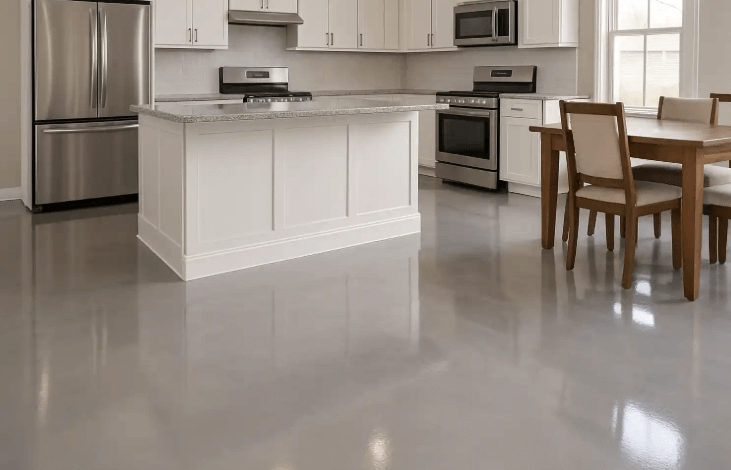
Metallic epoxy flooring has become one of the most sought-after finishes in modern commercial and industrial design, prized for its dramatic, almost liquid-looking 3D surface that transforms plain concrete into something that genuinely looks like poured stone or rippling water. But the striking final appearance that makes this flooring option so popular is also exactly why choosing among metallic epoxy suppliers carries more weight than it might for a simpler, single-color coating. The final look, durability, and longevity of a metallic epoxy floor depend heavily on the quality of the raw materials, the technical support provided during application, and the manufacturing consistency behind the product , factors that vary considerably from one supplier to the next.
What Makes Metallic Epoxy Different From Standard Flooring
Unlike conventional painted or single-color epoxy floors, metallic epoxy coatings incorporate specialized metallic pigment powders suspended within the epoxy resin base. During application, these pigments are manipulated using tools, air movement, or specific application techniques to create swirling, dimensional patterns that catch and reflect light in a way flat, single-color coatings simply cannot replicate. The result is a genuinely unique, almost artistic finished floor where no two installations look exactly identical, even when using the same base colors.
This distinctive visual effect depends heavily on the quality and consistency of the metallic pigment powder itself. Lower-quality mica powders can produce muddy, inconsistent color development or fade prematurely under UV exposure, while premium, UV-resistant metallic powders maintain vibrant color and dimensional depth for years after installation. This is one of the clearest ways that raw material quality among different metallic epoxy suppliers translates directly into visible, long-term differences in the finished floor.
Core Performance Factors Beyond Appearance
While the striking visual effect is what draws most buyers to metallic epoxy flooring initially, the practical performance characteristics matter just as much for long-term satisfaction, particularly in demanding commercial and industrial settings. Chemical resistance is essential for warehouse and industrial applications, where floors routinely face exposure to oils, acids, and other substances that would damage or discolor lower-quality coating systems over time. Impact and wear resistance similarly matters for spaces dealing with forklift traffic, dropped tools, or heavy foot traffic, since a coating that looks beautiful on installation day but chips or wears quickly under real-world use ultimately fails to deliver lasting value.
Seamless application is another practical advantage worth considering, since metallic epoxy flooring creates a continuous surface without grout lines or seams where dirt, moisture, and bacteria could otherwise accumulate. This makes it a particularly strong choice for environments with strict hygiene requirements, such as clean rooms, laboratories, and food-adjacent commercial spaces, where easy cleaning and minimal contamination risk are genuine operational priorities rather than simply aesthetic preferences.
| Performance Factor | Why It Matters | What to Ask Suppliers |
| Pigment quality | Determines color vibrancy and fade resistance | UV-resistant mica powder used? |
| Chemical resistance | Protects against oil, acid, industrial exposure | Tested against which chemicals? |
| Cure time and hardness | Affects usability timeline and durability | Walk-on time vs full cure time? |
| Mixing ratio consistency | Affects application reliability | Standard A:B ratio and tolerance? |
| Color range | Design flexibility for different spaces | Available metallic shades? |
| OEM/ODM support | Brand customization for resellers | Private labeling available? |
Where Metallic Epoxy Flooring Makes the Most Sense
Industrial and commercial warehouses represent one of the most common applications for metallic epoxy coatings, where the combination of chemical resistance and forklift damage protection delivers genuine practical value alongside the visual upgrade from plain concrete. Exhibition halls and plaza spaces increasingly use metallic epoxy to create a distinctive “marble-like” finish that elevates the overall impression of a commercial space, often serving as a relatively cost-effective way to dramatically improve the perceived quality of a venue compared to actual stone or marble installation.
Residential garages and basements have also become a growing market for metallic epoxy flooring, as homeowners increasingly recognize the easy-clean, durable surface as a practical upgrade over bare concrete or standard garage floor paint. Clean rooms and laboratories represent perhaps the most performance-critical application, where the seamless, waterproof nature of a properly applied metallic epoxy system directly supports the sanitary conditions these environments require to function correctly.
Application Considerations That Affect Final Results
Even the highest-quality metallic epoxy product from the best available suppliers will deliver disappointing results if application technique and environmental conditions are not properly managed. Mixing ratio precision matters enormously, since metallic epoxy systems typically require a specific resin-to-hardener ratio, and deviating from this ratio can result in improper curing, reduced durability, or inconsistent color development. Temperature and humidity during application and curing also significantly affect the final result, with most systems requiring specific environmental conditions to achieve proper curing within the expected timeframe.
Curing time itself deserves realistic expectations from buyers planning installation timelines. Most metallic epoxy systems reach a walkable state within a day or two after application, but full chemical curing , the point at which the floor reaches its maximum hardness and chemical resistance , typically takes considerably longer, often around a week. Planning installation schedules with this full curing timeline in mind, rather than treating the initial walkable state as complete readiness for heavy use, helps avoid premature damage to a still-curing floor.
UV Exposure and Outdoor Applications
One important limitation worth understanding before selecting a metallic epoxy system involves UV exposure. Standard metallic epoxy formulations, while extremely durable against chemical and mechanical wear, can experience gradual yellowing when subjected to continuous direct sunlight over extended periods, since epoxy resin chemistry is inherently somewhat UV-sensitive regardless of pigment quality. For outdoor applications or spaces with significant natural light exposure, applying a UV-resistant polyurethane topcoat over the base metallic epoxy layer provides an additional protective barrier that significantly slows this yellowing process, allowing buyers to enjoy the distinctive metallic finish in outdoor or sun-exposed settings without the color degradation that an unprotected system might experience over time.
Evaluating Suppliers for Bulk or Reseller Purchasing
Buyers purchasing metallic epoxy coatings for resale, contracting work, or large-scale commercial projects should evaluate potential suppliers on criteria that go well beyond a single product’s specifications. OEM and ODM customization capability matters considerably for resellers who want to build their own branded product line, since suppliers offering flexible color formulation and private label packaging provide significantly more business value than those offering only fixed, pre-branded products. Raw material consistency across production batches is equally important for buyers managing ongoing projects, since color and performance inconsistency between batches can create visible mismatches in larger installations or ongoing maintenance work.
Global logistics capability and responsive technical support round out the key evaluation criteria for serious buyers, particularly those managing projects across multiple locations or working with contractors who may need direct technical guidance during unfamiliar application scenarios. A supplier willing to provide detailed application guidance, troubleshoot unexpected curing or color issues, and support both experienced contractors and newer applicators tends to deliver a meaningfully better overall experience than a supplier treating each order as a purely transactional sale.
Making a Confident Choice Among Metallic Epoxy Suppliers
Selecting the right partner among competing metallic epoxy suppliers ultimately comes down to looking past the initial visual appeal of a finished sample photo and evaluating the underlying pigment quality, chemical resistance performance, application support, and manufacturing consistency that will determine how that floor actually performs and looks over years of real-world use. Buyers requesting material samples before committing to a large order, and asking direct questions about UV resistance, mixing ratios, and batch consistency, consistently end up with better long-term satisfaction than those who select based on price or appearance alone.
Reviewing a dedicated metallic epoxy suppliers product line before finalizing a decision allows buyers to compare available colors, technical specifications, and OEM support options directly, making it considerably easier to identify a supplier whose capabilities genuinely match a specific project’s requirements. For buyers still weighing options for an upcoming commercial or residential flooring project, requesting a sample directly from established metallic epoxy suppliers remains the most reliable way to evaluate real color development and finish quality before committing to a full installation.