Choosing an off-grid inverter manufacturer is a very different exercise from picking a grid-tied solar inverter, simply because there’s no utility connection to fall back on if something fails. When the inverter and battery bank are the entire power supply for a site, the manufacturer behind that equipment matters just as much as the specifications printed on the box.
This guide helps installers, EPC buyers, and property owners evaluate off-grid inverter manufacturers on the criteria that actually matter for standalone power reliability, so you can avoid the costly mistake of choosing equipment based on price alone and discovering its limitations only after the system is already deployed in a remote location.
Why the Manufacturer Matters More in Off-Grid Systems
In a grid-tied installation, the utility grid acts as a backstop. If the inverter underperforms or trips offline, the site typically still has power from the grid. In an off-grid system, that backstop doesn’t exist. A poorly engineered unit, weak after-sales support, or a manufacturer that discontinues parts can leave a remote site, whether it’s a farm, a telecom tower, a cabin, or an off-grid home, without power for days or even weeks. This is exactly why sourcing decisions for off-grid equipment should weigh manufacturer track record and support infrastructure just as heavily as the spec sheet.
Core Capabilities to Evaluate
Surge and Motor-Start Handling
Off-grid sites frequently run pumps, compressors, and other motor-driven loads that draw a large surge current at startup, sometimes three to six times their running wattage. A manufacturer’s surge rating, not just its continuous output rating, determines whether the inverter can actually start that equipment without tripping offline at the worst possible moment.
Battery Compatibility and Charging Profiles
Reputable off-grid inverter manufacturers support multiple battery chemistries, including lithium iron phosphate, lead-acid, and sometimes flow batteries, each with configurable charging profiles. Locking a buyer into a single proprietary battery chemistry limits future flexibility and can inflate replacement costs down the line, so open compatibility is generally worth prioritizing.
Generator Integration
Most off-grid systems, especially in regions with limited sun hours, pair the inverter with a backup generator. Strong manufacturers build in automatic generator start and stop logic along with clean transfer switching, rather than requiring a separate third-party controller to handle that coordination.
Parallel Stacking for Scalability
As a site’s power needs grow over time, being able to add additional inverter units in parallel, without replacing existing equipment, is a major differentiator between manufacturers designed for scalable deployments and those offering single-unit residential products only.
Manufacturer Evaluation Checklist
| Evaluation Criteria | What to Look For | Why It Matters |
| Certifications | UL 1741, IEC 62109, CE | Confirms safety testing and regulatory compliance |
| Surge rating | 2–3x continuous rating minimum | Determines ability to start motors/pumps |
| Battery compatibility | Multi-chemistry support (LFP, lead-acid) | Avoids vendor lock-in on replacement batteries |
| Warranty length | 5–10 years on inverter | Signals manufacturer confidence in build quality |
| Parallel/stacking support | Native multi-unit stacking | Enables scaling without full system replacement |
| Service network | Regional distributors, spare parts availability | Critical for remote-site repair turnaround |
| Track record | Years in operation, installed base | Reduces risk of discontinued support |
Questions to Ask a Manufacturer Directly
Before signing a purchase order, it’s worth getting direct, specific answers on the following:
- What is the realistic lead time for spare parts if a component fails on-site?
- Does the inverter support remote diagnostics or monitoring for sites without regular staff visits?
- What’s the maximum number of units that can be paralleled, and is that figure tested in the field or only rated on paper?
- Are firmware updates supported over the inverter’s expected lifespan, or only during an initial support window?
- What’s the manufacturer’s typical response time for warranty claims, especially for equipment installed in remote regions?
Manufacturers with confidence in their product tend to answer these questions directly and specifically. Vague or evasive answers are usually a warning sign worth taking seriously.
System Architecture at a Glance
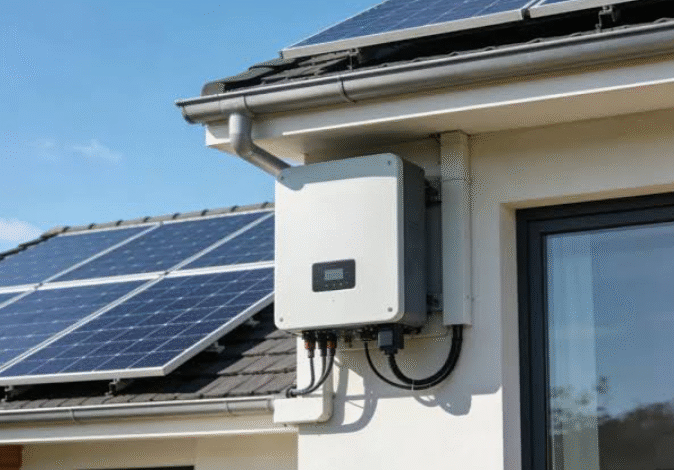
It helps to picture how each component in an off-grid system depends on the inverter’s performance. Solar panels feed power to the off-grid inverter, which manages charging of the battery bank and, when needed, coordinates with a backup generator to cover shortfalls during low-sun periods. Site loads draw power directly through the inverter, which has to balance all of these inputs and outputs without any grid connection to fall back on. Remote monitoring, where supported, gives an owner or service provider visibility into system performance without needing to physically visit the site, which becomes increasingly valuable the more remote the installation actually is.
Why Track Record Matters More Off-Grid Than On-Grid
A manufacturer’s years in operation and installed base carry extra weight in off-grid applications specifically, because the cost of a failure is so much higher when there’s no grid to fall back on. A manufacturer that’s been shipping off-grid inverters for a decade or more has typically already encountered and resolved the surge-handling edge cases, generator integration quirks, and firmware issues that a newer entrant may still be discovering in the field. Checking for a documented history of remote-site deployments, not just general solar industry experience, is a meaningful way to separate manufacturers built for standalone reliability from those primarily focused on grid-tied products.
Verifying Safety and Performance Claims Independently
Because off-grid systems carry higher stakes when something goes wrong, it’s worth verifying a manufacturer’s regulatory compliance testing directly rather than accepting a spec sheet’s claims at face value. Regulatory compliance testing conducted by accredited, independent labs confirms that surge ratings, safety protections, and charging behavior actually perform as advertised under realistic failure conditions, not just ideal lab conditions designed by the manufacturer itself. Asking a manufacturer directly whether their regulatory compliance testing was conducted by an independent third party, and requesting documentation of that testing, is a simple step that can prevent a costly surprise after a unit is already installed at a remote site.
See also: Transforming Brand Narratives into Business Assets
Final Thoughts
Choosing an off-grid inverter manufacturer is ultimately a decision about who you’re trusting to keep a site powered when there’s no utility grid available as a fallback. Surge handling, battery compatibility, generator integration, and a manufacturer’s track record for remote-site support all matter more than the lowest quoted price, especially for installations where a failure means real downtime rather than a minor inconvenience. Taking the time to ask direct questions, check independent testing, and evaluate a manufacturer’s service network before you commit will consistently lead to a more reliable, longer-lasting off-grid power system.