If you own a pool, you know the routine all too well. Every week brings the same tedious cycle of skimming leaves off the surface, wrestling with a manual vacuum hose, and scrubbing walls until your arms ache. What should be a backyard oasis often feels more like a second job. For years, pool owners accepted this reality as the unavoidable cost of crystal-clear water. But pool cleaning automation has fundamentally changed the equation, and cordless robotic pool cleaners represent the most advanced evolution of that technology.
These self-contained, battery-powered machines navigate your pool independently, scrubbing and filtering without any connection to your pump system or a restrictive power cord. They deliver professional-grade cleaning with virtually zero effort from you. So why exactly are cordless robotic pool cleaners the superior choice for hassle-free pool maintenance? This article explores their standout benefits, guides you through selecting the right model for your pool, explains how to maximize your investment through proper use and care, and compares them against every other cleaning option on the market. By the end, you’ll understand why so many homeowners are making the switch.
Top Benefits of Cordless Robotic Pool Cleaners for Homeowners
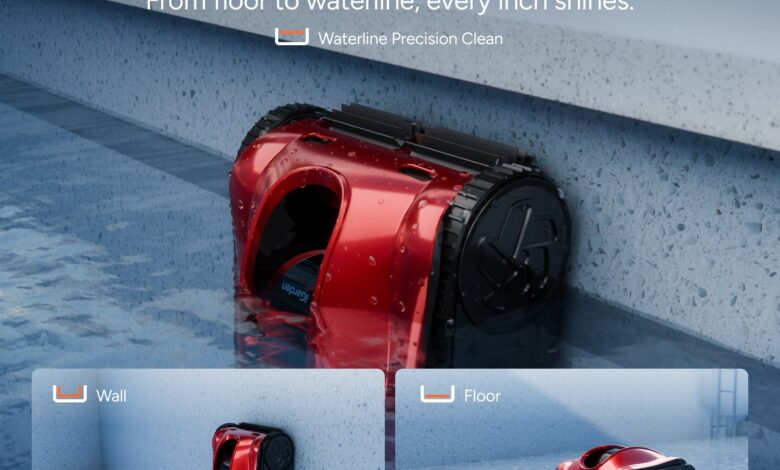
The most immediate benefit of a cordless robotic pool cleaner is the complete elimination of manual labor. There’s no dragging a heavy vacuum head across the floor, no untangling hoses, and no spending your Saturday afternoon hunched over the pool edge with a brush. You place the unit in the water, press a button, and walk away. The cleaner handles everything autonomously, navigating the pool floor, scaling walls, and scrubbing the waterline where algae and oils accumulate most stubbornly.
This “set it and forget it” convenience translates directly into reclaimed time. A typical cleaning cycle runs between 90 minutes and three hours depending on your pool’s size, and you don’t need to supervise any of it. Many homeowners simply drop the cleaner in before dinner and retrieve it afterward to find a spotless pool ready for the next morning’s swim.
Energy efficiency is another compelling advantage. Unlike pressure-side cleaners that require a dedicated booster pump or suction-side models that tax your main circulation pump, cordless robotic cleaners operate entirely on their own rechargeable battery. They draw no power from your pool’s electrical system during operation, and their efficient DC motors consume a fraction of the energy that running an additional pump would demand. Over a season, this difference adds up noticeably on your utility bill.
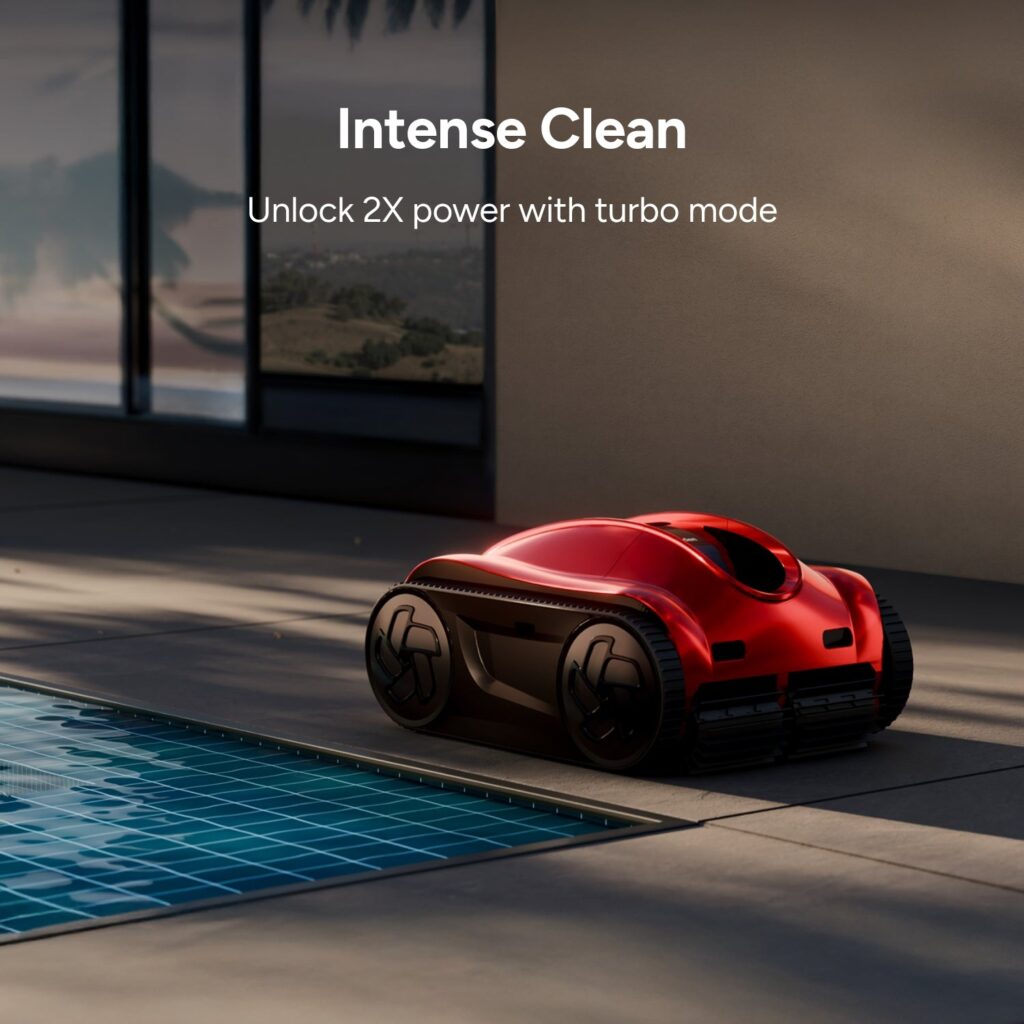
Cleaning performance sets these machines apart from every other automated option. Dual or triple scrubbing brushes rotate at high speed to dislodge debris and biofilm, while powerful onboard suction captures particles as small as two microns through dedicated filter cartridges. The result is water that’s not only visibly cleaner but also places less chemical demand on your sanitization system because particulate matter is physically removed rather than left to circulate. Operation is remarkably quiet since there’s no booster pump roaring in the background, and the absence of cords or suction connections eliminates entrapment hazards entirely. Because these cleaners are independent from your pool’s filtration system, they also reduce wear on your pump and extend the life of your main filter, making them a genuinely holistic upgrade to your maintenance routine.
See also: Mastering Advanced Lifeguarding Techniques
Your Guide to Choosing the Best Cordless Pool Cleaner
Selecting the right cordless robotic pool cleaner starts with understanding your pool’s specific characteristics. A small plunge pool with smooth plaster surfaces presents entirely different demands than a large freeform pool with textured pebble finish and multiple steps. Before evaluating any model, measure your pool’s total surface area, note its shape and depth variations, and identify the surface material. These three factors determine the minimum battery capacity, navigation sophistication, and brush type your cleaner needs to deliver thorough results.
Battery life deserves your closest attention because it directly dictates whether a single cleaning cycle can cover your entire pool. For pools under 30 feet in length, a runtime of 90 minutes typically suffices. Larger pools or those with complex shapes featuring islands, swim-outs, or L-configurations demand at least two to three hours of continuous operation to ensure complete coverage. Always match the manufacturer’s stated coverage area to your actual pool dimensions rather than relying solely on runtime numbers, since navigation efficiency varies between models.
Filtration capability separates adequate cleaners from exceptional ones. Fine mesh cartridge systems capture smaller particles, often down to two microns, making them ideal for pools surrounded by trees that shed pollen and fine dust. Bag-style filters tend to hold more debris volume, which suits pools that accumulate large quantities of leaves and twigs. Consider how easy the filter is to access and rinse, because a filter you find tedious to clean is one you’ll neglect.
Climbing ability matters if you want walls and the waterline cleaned automatically. Look for models with strong drive motors and treaded tracks or wheels specifically engineered for vertical surfaces. Rubber and PVA brush combinations work best on textured surfaces like pebble or exposed aggregate, while foam rollers excel on smooth tile and fiberglass. If your pool has multiple surface types, prioritize a cleaner with dual-material brushes that adapt to both.
Smart features add genuine value when they align with your habits. App connectivity lets you schedule cleaning sessions, monitor cycle progress remotely, and receive maintenance alerts. Brands like iGarden have been expanding their smart home ecosystems to integrate outdoor maintenance devices, making it easier to manage pool cleaning alongside other automated home tasks from a single platform. Some models offer multiple cleaning modes, allowing you to target only the floor for a quick refresh or run a full walls-and-floor cycle for deeper cleaning. Gyroscopic navigation and sensor arrays help the cleaner map efficient paths rather than bouncing randomly, which conserves battery and improves coverage consistency.
When evaluating models, apply this decision framework: first confirm the unit’s coverage matches your pool size, then verify the battery supports a complete cycle with margin to spare, check that the brush type suits your surface material, ensure the filtration grade meets your debris profile, and finally weigh smart features against your willingness to use them. A cleaner that excels in the first four categories but lacks app control will still outperform a feature-rich model that runs out of battery halfway through your pool.
Key Feature Spotlight: Achieving Optimal Long Runtime
Modern cordless robotic cleaners rely on lithium-ion battery packs, the same technology powering electric vehicles and professional power tools. These cells offer high energy density in a compact form, enabling runtimes that were impossible with earlier battery chemistries. Equally important are the brushless DC motors paired with these batteries. They convert stored energy into mechanical work with minimal heat loss, meaning more of every charge goes toward actual cleaning rather than wasted thermal output.
What constitutes “enough” runtime depends entirely on your pool. A 12-by-24-foot rectangular pool rarely needs more than 90 minutes of operation. A 20-by-40-foot kidney-shaped pool with a deep end and attached spa may require a full three-hour cycle. If your pool falls between these extremes, aim for a model offering at least 30 minutes more than the manufacturer’s recommended minimum for your square footage. That buffer accounts for walls, steps, and any navigation inefficiency.
To maximize battery longevity across seasons, follow a few straightforward practices. Always allow the battery to cool completely after a cycle before recharging, as heat accelerates cell degradation. Store the cleaner with a partial charge, around 50 percent, if you’re closing the pool for winter. Avoid leaving the unit on the charger indefinitely once fully charged, and keep the charging station in a cool, shaded area. These habits preserve cell health and ensure your cleaner delivers its full rated runtime year after year rather than gradually losing capacity.
Maximizing Your Investment: How to Use and Maintain Your Cleaner
Getting started with a cordless robotic pool cleaner requires almost no learning curve. Place the unit in the water at the deep end, allowing it to sink to the floor and settle. Press the power button either on the device itself or through the companion app, select your preferred cleaning mode, and walk away. When the cycle completes, most models will park themselves at the wall or float to the surface for easy retrieval. Lift the cleaner out, empty the filter canister, and set it on its charging dock. That’s the entire process from start to finish.
A consistent maintenance routine keeps your cleaner performing at its peak for years. After every session, remove the filter cartridge or basket and rinse it thoroughly with a garden hose, dislodging any compacted debris from the mesh. Once a week, inspect the brushes for tangled hair, string, or rubber deterioration. Worn brushes lose their scrubbing effectiveness gradually, so replace them at the first sign of flattened bristles or cracking. Check the drive tracks or wheels monthly for debris lodged in the treads and confirm they spin freely without resistance. Before storing the unit for an extended period, dry it completely, charge the battery to approximately half capacity, and keep it in a cool, shaded location away from direct sunlight that could degrade plastic housings and seals.
If your cleaner occasionally gets stuck on a drain cover or ladder, reposition the obstacle or use the unit’s obstacle-detection sensitivity settings if available. An incomplete cycle usually signals either a full filter restricting suction or insufficient battery charge. Empty the filter mid-cycle for heavily debris-laden pools, and verify you’re starting each session with a full charge. Should the cleaner repeatedly miss a specific zone, check that its brushes and tracks are clean and making full contact with the surface, as worn components reduce traction on walls and inclines. Addressing these minor issues promptly prevents them from compounding into costly repairs and ensures your cleaner delivers reliable, thorough results season after season.
Cordless vs. Other Pool Cleaning Automation: A Clear Comparison
Understanding how cordless robotic cleaners stack up against other automated options clarifies why they’ve become the preferred choice for most homeowners. Corded robotic cleaners offer similar scrubbing power and filtration quality, but their trailing power cable limits placement flexibility, creates tangling hazards around ladders and rails, and requires a nearby outdoor GFCI outlet. You’re tethered to wherever you can reach with that cord, and coiling it after each use adds another small chore to the process. Cordless models eliminate all of these constraints—drop them in anywhere, from any side of the pool, without a single thought about cable management.
Pressure-side cleaners rely on a dedicated booster pump or your return line’s water pressure to propel themselves and sweep debris into an attached bag. They clean floors reasonably well but struggle on walls, consume significant electricity through that extra pump, and depend entirely on your pool’s plumbing infrastructure. Suction-side cleaners connect to your skimmer line, using your main pump’s suction to move and collect debris. They’re inexpensive upfront but dump everything into your pump basket and filter, accelerating wear on both components while delivering inconsistent coverage and almost no scrubbing action.
Cordless robotic cleaners outperform every alternative across the metrics homeowners care about most. They operate independently from your pool’s plumbing and electrical systems, meaning zero additional energy draw from pumps. Their dedicated brushes and onboard filtration deliver superior cleaning on all surfaces without burdening your existing equipment. They offer complete placement freedom, whisper-quiet operation, and smart scheduling capabilities that no pressure-side or suction-side cleaner can match. For homeowners who prioritize convenience, thorough cleaning, energy savings, and equipment longevity, cordless robotic models represent the clearest upgrade available in pool maintenance automation today.
Reclaim Your Leisure Time With Effortless Pool Maintenance
Cordless robotic pool cleaners have fundamentally redefined what pool ownership feels like on a daily basis. They eliminate the physical drudgery of manual cleaning, deliver results that surpass every other automated alternative, and do so while consuming less energy than systems that depend on booster pumps or your main circulation system. The independence they offer—from cords, from plumbing connections, from constant supervision—addresses the core frustrations that have made pool maintenance feel like a burden for decades.
For homeowners who value reliability and simplicity, these machines deliver exactly what matters most: consistent, thorough cleaning with minimal input required. You press a button, and the work gets done. Your filters last longer, your chemical costs decrease, and your weekends belong to you again. Investing in a cordless robotic pool cleaner isn’t just a purchase—it’s a decision to reclaim the leisure time your pool was always meant to provide. It transforms maintenance from an obligation into a background task you barely notice, making pool ownership genuinely effortless for the first time.