Finding a ficus bonsai tree for sale is the easy part. Finding a genuinely healthy one is where most first-time buyers run into trouble, especially when shopping online, where you can’t touch the soil, check the roots, or smell for warning signs yourself before committing to a purchase.
This guide walks through the different places you can buy a ficus bonsai, from local nurseries to online specialty sellers to general marketplaces, and gives you a practical framework for spotting plant health issues before you buy, so your money goes toward a tree that’s genuinely set up to thrive rather than one that’s already struggling behind a good photo.
Where Ficus Bonsai Trees Are Typically Sold
Specialty Bonsai Nurseries
These sellers focus exclusively on bonsai and typically offer the most accurate descriptions, the healthiest stock, and staff knowledgeable enough to answer specific questions about the individual tree in front of you. Prices tend to run higher here, but so does the reliability of what you’re actually getting for that price.
General Garden Centers and Big-Box Retailers
Many general garden centers carry ficus bonsai as a seasonal or year-round item. Selection is usually limited to young, mass-produced trees rather than developed specimens, but prices are typically lower, and it’s easy to physically inspect the plant before you buy.
Online Bonsai Specialty Retailers
These sellers ship trees nationally or internationally and often provide a far wider range of ages, sizes, and price points than local options can match. The tradeoff is shipping risk and the inability to inspect the specific tree before purchase, though reputable sellers offset this with detailed, current photos of the actual plant.
General Online Marketplaces
Ficus bonsai trees also show up regularly on broad e-commerce and marketplace platforms. Quality and listing accuracy vary far more here than with specialty sellers, which makes extra scrutiny of photos, reviews, and seller history especially important before you buy.
How to Spot a Healthy Ficus Bonsai
Visual Signs of Health
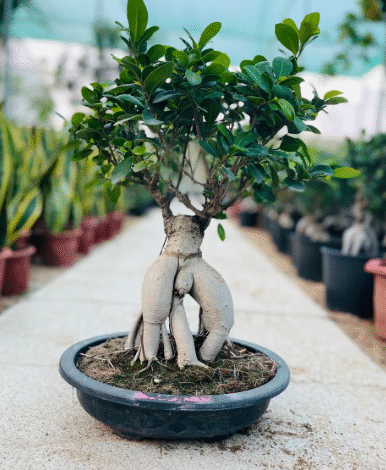
A healthy tree shows firm, deep green leaves without significant yellowing or spotting, visible new growth at the branch tips, and bark that’s smooth or appropriately textured for its age, without cracking or soft spots anywhere along the trunk.
Signs of Root or Soil Problems
If you’re able to see the base of the tree, check for a foul smell coming from the soil, which is a common sign of root rot; soil that stays constantly wet or feels compacted; and roots circling tightly at the surface, which can indicate the tree has been left pot-bound for too long.
Signs of Pest Issues
Sticky residue on leaves, fine webbing between branches, or visible small insects are all common indicators of pest problems like spider mites or scale. These issues are treatable, but knowing about them upfront gives you the option to negotiate on price or simply choose a different, cleaner tree instead.
Comparing Where to Buy
| Source | Selection Quality | Price Range | Ability to Inspect | Shipping Risk |
| Specialty bonsai nursery | High, often developed trees | Higher | In-person (if local) | Low if local, moderate if shipped |
| Garden center / big-box | Basic, young trees | Lower | In-person | None (local pickup) |
| Online bonsai specialty retailer | Wide range, detailed listings | Moderate-High | Photos only | Moderate |
| General online marketplace | Highly variable | Wide range | Photos/reviews only | Higher |
Questions Worth Asking a Seller Before Buying
- Can you provide current photos of the specific tree I’d be purchasing, not a generic stock image?
- How is the tree packaged and protected during shipping, and are there seasonal shipping restrictions?
- What’s your policy if the tree arrives with significant leaf drop or visible damage?
- How old is the tree, and how long has it actually been trained as a bonsai versus grown as a young plant?
- What soil mix is the tree currently planted in, and will it need repotting soon after arrival?
Asking these questions upfront, whether over email, chat, or in person, tends to filter out sellers who aren’t confident about what they’re offering and points you toward the ones worth buying from.
A Simple Pre-Purchase Health Check Process
Before finalizing any purchase, it helps to work through a consistent sequence rather than judging a tree on first impression alone. Start by reviewing the listing photos closely, paying attention to leaf color and overall density rather than just the tree’s general shape. Next, inspect the trunk and root base if it’s visible in the photos or in person, looking for the warning signs covered above. From there, check the seller’s reviews and return policy, since this becomes your safety net if something goes wrong after purchase. Follow up with any direct questions you still have for the seller, and only then make your final purchase decision. Skipping steps in this process, particularly the seller-reputation check, is where most buyers run into avoidable problems.
Why Seller Reputation Matters as Much as the Tree Itself
It’s tempting to focus entirely on the tree in the listing and overlook the seller behind it, but reputation is often the strongest predictor of how a purchase will actually turn out. A seller with a long track record of horticultural transparency tends to provide more accurate photos, clearer answers to pre-purchase questions, and fairer resolutions if a tree arrives in poor condition. Reviews that specifically mention plant health after arrival, not just shipping speed or packaging, are especially valuable here, since they tell you how the tree performed once it was actually in someone’s home rather than just how it looked in a listing photo.
Verifying Health Claims Independently
Because sellers naturally have an incentive to describe their own stock favorably, it’s worth doing a bit of independent horticultural transparency checking before you commit to a purchase, especially for higher-priced, more developed specimens. Comparing a seller’s health and species claims against what’s generally known about ficus growth habits, typical leaf color, and normal root development can help you tell the difference between a genuinely healthy tree and one that’s been described more generously than it deserves. This kind of horticultural transparency check is particularly useful when buying online, where photos are your only source of information and a seller’s written description is doing a lot of the persuasive work.
See also: Transforming Brand Narratives into Business Assets
Final Thoughts
The healthiest ficus bonsai isn’t necessarily the most expensive one or the one with the fanciest listing photos. It’s the one that shows clear, consistent signs of good care: firm green leaves, healthy new growth, a clean root base, and a seller willing to answer direct questions honestly. Whether you’re buying from a specialty nursery, a big-box garden center, an online retailer, or a general marketplace, running through the same basic health checks and asking the same pointed questions every time will consistently steer you toward a tree worth bringing home.