A lithium battery storage system is more than just a battery. It’s a complete package of cells, management electronics, and software working together to store and deliver energy safely and predictably. Understanding what actually makes up that package is what separates buyers who can confidently evaluate a quote or spec sheet from those relying on a single headline capacity number that doesn’t tell the full story.
This guide walks homeowners, facility managers, and installers through what a lithium battery storage system is really built from, how the different system types compare, and what to check before buying, so you know exactly what you’re paying for and how it will perform over the long term.
What Makes Up a Lithium Battery Storage System
A complete system is built from several distinct layers, not just the battery cells themselves.
Battery cells are the energy-storing units, most commonly lithium iron phosphate, or LFP, in stationary applications today thanks to its strong safety profile and long cycle life.
The Battery Management System, or BMS, consists of electronics that monitor voltage, temperature, and current at the cell level, preventing overcharge, over-discharge, and thermal issues before they become safety concerns.
The enclosure and thermal management layer is the housing designed to protect cells from temperature extremes, moisture, and physical damage, using either passive or active cooling depending on the overall size of the system.
The inverter or charge controller interface is the connection point that converts stored DC energy into usable AC power, or manages DC charging directly from solar panels.
Monitoring and control software is the layer that lets owners or operators see state of charge, overall system health, and performance data, and in many modern systems, automate charge and discharge scheduling entirely.
Types of Lithium Battery Storage Systems
All-in-One (AIO) Systems
These combine the battery, inverter, and BMS into a single enclosure. All-in-one systems are especially popular for residential installations because they simplify the installation process and reduce the number of separate components that need to be sourced and wired.
Modular Stackable Systems
These consist of battery modules that can be added one at a time to increase capacity, often paired with a separate inverter. Modular systems are common in both residential and light commercial applications where future capacity expansion is a realistic possibility.
Containerized Systems
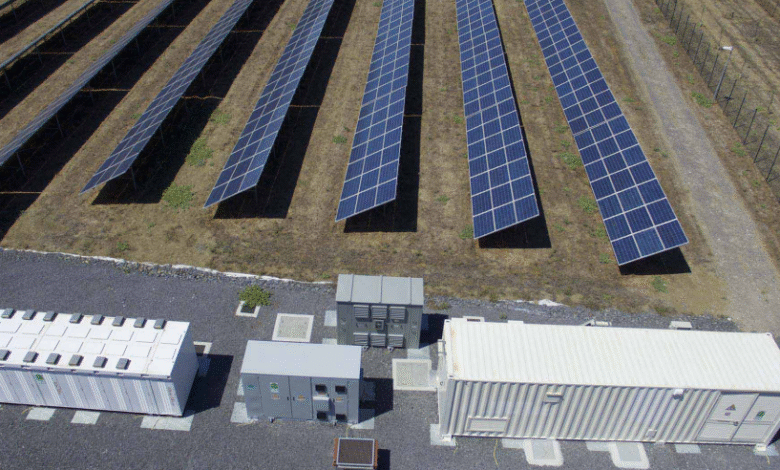
These are large-scale systems housed in standard shipping containers, used for utility-scale or major commercial and industrial deployments where capacity is measured in hundreds of kWh up to multiple MWh.
Rack-Mounted Systems
Battery modules mounted in standard server-style racks are common in commercial and light industrial settings where space is well-organized, but capacity needs exceed what a simple all-in-one unit can provide.
Comparing System Types
| System Type | Typical Capacity Range | Best Fit | Installation Complexity |
| All-in-one (AIO) | 5–15 kWh | Residential | Low |
| Modular stackable | 10–60 kWh | Residential/light commercial | Moderate |
| Rack-mounted | 50–300 kWh | Commercial/industrial | Moderate-High |
| Containerized | 200 kWh–several MWh | Utility / large industrial | High |
What to Check Before Buying a System
Usable capacity versus rated capacity should always be confirmed directly, since the percentage of rated capacity that’s actually usable, known as depth of discharge, varies meaningfully by manufacturer and chemistry.
Cycle life and warranty terms matter just as much as upfront price. Look for warranties specified in both years and cycles, along with a guaranteed minimum capacity retention at the end of the warranty period, rather than vague performance promises.
Certifications are non-negotiable for safety. Confirm the system meets the primary safety standards for battery energy storage systems relevant to your region before moving forward with any purchase.
Scalability deserves a direct question to the installer or manufacturer: can additional capacity be added later without replacing existing hardware or switching to a different inverter entirely?
Monitoring and integration capabilities should be checked upfront, including whether the system offers remote monitoring and whether it can integrate with third-party energy management or building automation software you already use.
Fire safety and installation code compliance can significantly affect where and how a system is installed. Larger systems, especially indoor installations, may be subject to local fire code setback and ventilation requirements that vary considerably by jurisdiction.
Applications Beyond Solar
While lithium battery storage systems are closely associated with solar power, they serve several standalone applications that have nothing to do with generating your own electricity.
Backup power for homes and businesses in areas with unreliable grid service works entirely independent of any solar array, charging from the grid and discharging during outages.
Demand charge management helps commercial and industrial sites reduce peak-demand utility charges by discharging stored energy during the most expensive periods of the day rather than drawing directly from the grid.
EV charging support buffers grid draw during high-power vehicle charging sessions, smoothing out demand spikes that would otherwise strain a site’s electrical infrastructure.
Microgrids combine storage with generation and controls to serve a defined area independently of the main grid when needed, which is increasingly common for critical facilities and remote sites.
How the Components Work Together
It helps to think of a lithium battery storage system as a chain rather than a single product. Battery cells store the raw energy, while the battery management system continuously monitors that energy at the cell level to keep the whole system operating within safe limits. The enclosure and thermal management layer protects the cells from the environment they’re installed in, whether that’s a garage, a rooftop, or an industrial yard. The inverter or charge controller then translates stored DC energy into a form your home, business, or the grid can actually use, and the monitoring software ties everything together so you can see exactly how the system is performing at any given moment. A weakness in any one of these layers, not just the battery cells themselves, can compromise the safety or performance of the entire system.
Why Independent Safety Standards Matter
Because battery storage safety claims can vary significantly between manufacturers, it’s worth grounding any purchase decision in recognized safety certification standards rather than relying solely on a seller’s own marketing language. Systems that meet established certification standards for battery energy storage have been independently tested for thermal runaway resistance, electrical safety, and fire performance under realistic failure scenarios, not just normal operating conditions. Checking for compliance with recognized safety certification standards before you buy is one of the simplest ways to filter out lower-quality systems, regardless of how impressive their capacity or price point might look on paper. This matters even more for larger installations, where a safety failure has far greater consequences than it would with a small residential unit.
See also: Transforming Brand Narratives into Business Assets
Final Thoughts
A lithium battery storage system is only as good as the sum of its parts: the cells, the management electronics, the enclosure, the inverter interface, and the software tying it all together. Understanding how these layers interact, which system type fits your capacity needs, and which certifications and warranty terms actually matter will put you in a far stronger position than comparing systems on capacity numbers alone. Whether you’re sizing a system for residential backup power, commercial demand management, or a larger industrial deployment, taking the time to evaluate the full package rather than just the battery itself is what leads to a safe, reliable, long-term investment.