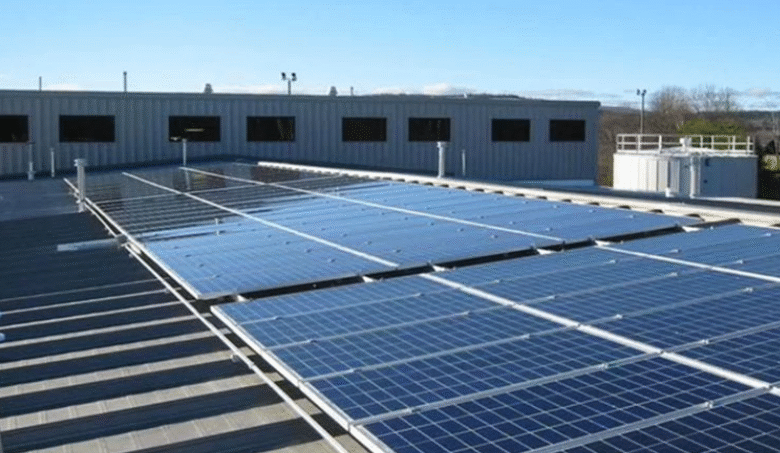
Solar panels only generate power when the sun is out, which means the battery is what actually determines whether a system delivers real independence from the grid. Chemistry, sizing, and lifespan aren’t just technical details buried in a spec sheet; they’re the factors that decide whether your system performs reliably for a full decade or more, or quietly underdelivers by year three.
This guide walks homeowners, installers, and small commercial buyers through how lithium-ion solar batteries actually work, why chemistry choice matters more than most marketing materials suggest, and how to size and evaluate a battery properly before you invest in one.
Why Lithium-Ion Replaced Lead-Acid for Solar Storage
For decades, lead-acid batteries were the default choice for solar storage simply because they were the only mature, affordable option available. Lithium-ion solar batteries have largely replaced them for a few clear, measurable reasons.
Usable capacity is the biggest factor. Lead-acid batteries typically can only be discharged to about 50% depth of discharge without shortening their lifespan, while most lithium-ion solar batteries safely support 90–100% depth of discharge. That means a lithium battery delivers roughly double the usable capacity for the same rated size.
Cycle life tells a similar story. Lead-acid batteries generally last 500 to 1,500 cycles, while quality lithium iron phosphate batteries are commonly rated for 6,000 to 10,000 cycles, translating into years of additional service life.
Weight and footprint matter more than many buyers expect. Lithium batteries store significantly more energy per kilogram and per square foot than lead-acid, which becomes especially important for space-constrained installations.
Maintenance requirements are dramatically lower. Lithium-ion systems require no watering, equalization charging, or ventilation for off-gassing, unlike flooded lead-acid batteries that demand ongoing upkeep.
Lithium Battery Chemistries Used in Solar
Not all “lithium-ion” batteries are the same, and the chemistry behind the label matters more than most buyers realize. Two chemistries dominate the solar storage market today.
Lithium Iron Phosphate (LFP or LiFePO4) is the dominant choice for stationary solar storage, thanks to excellent thermal stability, long cycle life, and lower fire risk compared to other lithium chemistries. It has slightly lower energy density than NMC, but stationary systems rarely need to optimize for weight the way electric vehicles do, which makes that tradeoff largely irrelevant for home and commercial solar storage.
Nickel Manganese Cobalt (NMC) offers higher energy density and is more common in electric vehicles and some earlier-generation solar batteries. It’s generally considered to carry higher thermal risk than LFP, which is a major reason most solar-specific manufacturers have shifted toward LFP for stationary storage applications.
Key Specifications to Compare
| Specification | What It Means | Why It Matters |
| Usable capacity (kWh) | Energy actually available for use, not just rated capacity | Determines real-world backup duration and self-consumption |
| Depth of discharge (DoD) | Percentage of capacity safely usable per cycle | Higher DoD means more usable energy per unit installed |
| Cycle life | Number of charge/discharge cycles before capacity degrades | Directly affects expected system lifespan |
| Round-trip efficiency | Energy retained after a full charge/discharge cycle | Higher efficiency means less solar energy wasted in storage |
| C-rate | Maximum safe charge/discharge speed relative to capacity | Affects how quickly the battery can respond to demand spikes |
| Operating temperature range | Safe temperature window for charging/discharging | Determines suitability for garages, outdoor enclosures, or extreme climates |
| Warranty (years or cycles) | Manufacturer’s guaranteed performance window | Signals confidence in long-term degradation behavior |
Sizing a Lithium-Ion Solar Battery System
Battery sizing should always start with actual household or facility energy usage, not the size of the solar array sitting on your roof. A practical, step-by-step approach works best.
First, determine your average daily energy consumption in kWh per day, using utility bills or a monitoring device rather than rough estimates. Next, decide how many hours of backup or self-consumption coverage you actually want, keeping in mind that full-day backup requires significantly more capacity than simple evening-peak coverage. From there, divide your target coverage energy by the battery’s usable depth of discharge, not its rated capacity, to size the system correctly. Finally, add a buffer for degradation, since capacity declines gradually over the battery’s life and sizing to exactly today’s needs can leave a real shortfall by year seven or eight.
What Affects Battery Lifespan in Real-World Use
Depth of discharge per cycle plays a major role in long-term wear. Consistently discharging deeper than necessary accelerates degradation compared to shallower, more frequent cycles that put less stress on the cells.
Ambient temperature is the single biggest factor in accelerated lithium battery degradation. Installations in hot garages or under direct sun exposure will degrade noticeably faster than those in climate-controlled or shaded locations.
Charge and discharge rate also matters. Consistently charging or discharging at high C-rates generates more heat and stress on the battery than moderate, steady rates.
Battery management system quality ties everything together. A well-engineered BMS prevents overcharge, over-discharge, and cell imbalance, all of which shorten usable life significantly if left unmanaged over time.
How a Lithium-Ion Solar Battery Fits Into the System
It helps to picture the full energy path rather than thinking of the battery in isolation. Solar panels generate DC power, which flows through a charge controller or inverter that manages how that energy is directed. From there, the lithium-ion battery bank stores surplus energy, with the battery management system continuously monitoring cell-level health to keep the pack operating safely. Stored energy is then drawn to power home or facility loads as needed, and in grid-tied systems, the utility grid remains available as a backup or supplemental source. Understanding this full chain makes it much easier to see why a weak link anywhere along the way, not just an undersized battery, can limit real-world system performance.
Why Independent Performance Data Matters More Than Marketing Claims
Battery manufacturers naturally have an incentive to present their own products in the best possible light, which is exactly why it’s worth grounding your buying decision in independent battery performance research rather than relying solely on a spec sheet’s headline numbers. Independent battery performance research typically tracks real-world degradation curves, round-trip efficiency under varied conditions, and long-term cycle life data across many battery models and manufacturers, giving a far more reliable picture than a single warranty claim. Comparing a manufacturer’s stated cycle life and capacity retention against independent battery performance research can help you spot overly optimistic marketing before you commit to a purchase, particularly for higher-cost systems where a performance shortfall becomes expensive years down the line.
Certification and Safety Standards Worth Confirming
Beyond raw performance, safety certification should factor directly into any purchase decision. Systems that meet recognized safety standards for battery energy storage have been independently tested for thermal runaway resistance and fire performance under realistic failure conditions, not just normal day-to-day operation. Confirming this kind of certification matters just as much for a residential rooftop battery as it does for a larger commercial installation, since the consequences of a safety failure scale with system size but the underlying risk exists at any scale.
See also: Transforming Brand Narratives into Business Assets
Final Thoughts
Choosing the right lithium-ion solar battery comes down to understanding chemistry, sizing the system to your actual energy usage rather than your solar array size, and paying close attention to the real-world factors that determine lifespan, especially temperature and depth of discharge habits. LFP chemistry, careful sizing with a degradation buffer built in, and a battery management system you can trust are the foundation of a solar storage investment that performs reliably for a decade or more, rather than one that quietly falls short of its promised lifespan.