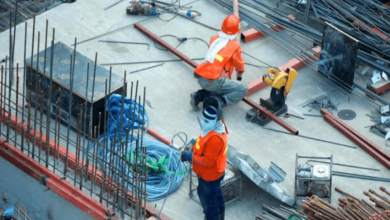
Most construction projects don’t fall apart at the building stage. They fall apart in the last few days — when everyone is trying to “just clean it up quickly” and move on.
Post build cleaning is often treated like a finishing touch that can be rushed. But that’s exactly where mistakes creep in. Small shortcuts at the end can undo weeks (or months) of hard work and leave a site looking unfinished, unsafe, or unprofessional.
Here are five of the most common mistakes builders make when cleaning a site — and how to avoid them.
One of the biggest mistakes is cleaning in the wrong order. It sounds simple, but it’s where a lot of problems start. If you begin on the floors before dealing with ceilings, ledges, and high surfaces, you end up chasing dust around the space. Every time you clean something above, it falls back down onto what you’ve already done. The result is double the work and a finish that never feels complete. The fix is straightforward: always work top-down, not the other way around.
Another common issue is underestimating construction dust. It’s not the same as household dust — it’s finer, heavier in volume, and far more invasive. A quick sweep or standard vacuum won’t remove it properly. In many cases, it just gets pushed into corners or back into the air. This is why sites often “look clean” for a day and then settle back into a dusty state. The solution is using proper filtration equipment and taking time to extract dust rather than move it around.
A third mistake is ignoring the details that people assume don’t matter. Light switches, sockets, door frames, skirting edges — these are the areas that are often skipped when time is tight. But they’re also the first things people notice when they walk into a finished space. A property can be spotless in the middle of a room, but if the edges are dusty or marked, it feels unfinished. Avoiding this comes down to discipline: slowing down at the end and treating detail work as essential, not optional.
The fourth issue is leaving debris until “after the clean.” On busy sites, it’s common for leftover materials, packaging, and scraps to be pushed aside while the main cleaning is done. The problem is that this immediately re-contaminates cleaned areas. Dust sticks to debris, gets moved around, and spreads again. The correct approach is to fully clear the site before any deep cleaning begins. No exceptions.
See also: Fitted Kitchens: The Heart of Every Home
Finally, there’s the mistake of treating post build cleaning like regular cleaning. It isn’t. Standard tools and methods simply aren’t designed for construction residue, adhesives, paint splashes, or heavy dust loads. Trying to handle it the same way leads to poor results and wasted time. The fix is using the right equipment and approach from the start — industrial vacuums, appropriate cleaning agents, and a methodical process that matches the conditions of a build site.
What ties all of these mistakes together is speed. When deadlines are tight, cleaning becomes something to rush through rather than complete properly. But that usually costs more time in the end, not less.
A properly cleaned site doesn’t happen by accident. It comes from slowing down at the right moment, following the right order, and treating the final stage with the same care as the build itself.
Because once the dust settles — literally — it’s the cleaning that decides how the project is remembered.