The same core technology behind an automatic capping machine- cap feeding, orientation, placement, and torque application- gets applied very differently depending on whether you’re bottling beverages, packaging pharmaceuticals, or filling household chemical products. This guide walks through how automatic capping machines are used across major industries, what industry-specific requirements shape equipment selection in each case, and what buyers in each sector should prioritize, so you can benchmark your own requirements against how similar operations approach the same equipment decision.
Food and Beverage Industry
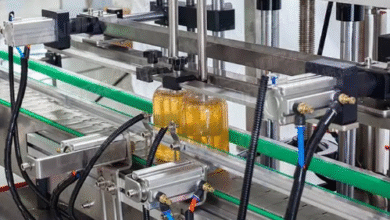
Beverage production is one of the highest-volume applications for automatic capping equipment, typically running spindle or rotary systems at high speed for standard screw caps on water, juice, and carbonated beverage bottles. Key priorities in this sector include consistent seal integrity to prevent leaks and carbonation loss, hygienic design suited to washdown cleaning, and integration with high-speed filling equipment, often in a monoblock configuration for maximum efficiency. Equipment in this category is typically validated against Good Manufacturing Practice expectations set out by bodies such as the FDA.
See also: About Datrihelminen Life
Pharmaceutical and Nutraceutical Industry
Pharmaceutical capping applications often require child-resistant closures, tamper-evident features, and precise torque control to meet regulatory requirements, including packaging standards published by the Consumer Product Safety Commission (CPSC). Automatic chuck cappers are common here due to their precision, often paired with induction sealing equipment for an additional tamper-evident foil seal beneath the cap. Traceability integration linking capping data to batch records is frequently a requirement in this sector beyond the capping function itself.
Cosmetics and Personal Care Industry
This industry uses a particularly wide range of closure types, pumps, sprayers, snap-fit lids, and screw caps, often on smaller production runs with frequent product changeovers. Automatic capping machines in this sector prioritize changeover flexibility and gentle, precise torque control to avoid damaging cosmetic-specific dispensing mechanisms, which tend to be more delicate than industrial or beverage closures.
Household and Industrial Chemical Products
Chemical product packaging often involves larger container sizes and closures requiring strong, leak-proof seals to prevent hazardous spillage during shipping and handling. Automatic capping equipment in this sector frequently emphasizes robust torque verification and reject systems, since a failed seal on a chemical product carries higher safety and liability stakes than most consumer goods categories.
Spirits, Wine, and Alcoholic Beverage Industry
This sector relies heavily on ROPP (Roll-On Pilfer-Proof) capping for tamper-evident aluminum closures, alongside cork-driving equipment for wine products using traditional cork closures. Presentation quality matters significantly here, since the capping process directly affects the premium appearance expected by consumers in this category. Regulatory context for this sector, particularly around labeling and closure requirements, generally falls under the Alcohol and Tobacco Tax and Trade Bureau (TTB) in the US.
Industry Applications Comparison
| Industry | Common Closure Types | Priority Requirements | Typical Machine Type |
| Food & Beverage | Screw caps, sports caps | High speed, hygienic design, seal integrity | Spindle/rotary, often monoblock |
| Pharmaceutical/Nutraceutical | Child-resistant, induction-sealed caps | Regulatory compliance, precision torque, traceability | Chuck capper + induction sealer |
| Cosmetics/Personal Care | Pumps, sprayers, snap-fit lids | Changeover flexibility, gentle torque | Chuck capper, semi/full automatic |
| Household/Industrial Chemical | Leak-proof screw caps, safety closures | Robust sealing, torque verification | Spindle/chuck with reject system |
| Spirits/Wine | ROPP aluminum caps, corks | Tamper evidence, premium presentation | ROPP capper, cork-driving equipment |
How Industry Requirements Shape Equipment Selection
- Regulatory environment: pharmaceutical and certain chemical product categories face stricter compliance requirements that directly influence which torque verification and traceability features are necessary versus optional.
- Production volume and changeover frequency: high-volume beverage lines prioritize raw speed, while cosmetics manufacturers running many small-batch SKUs prioritize fast, low-cost changeover capability instead.
- Container and closure diversity: industries using a narrow range of standard closures can use simpler, more cost-effective equipment, while industries with diverse closure types need more flexible or modular systems.
- Safety and liability considerations: products where a failed seal creates a safety hazard, such as certain chemicals or pharmaceuticals, generally justify higher investment in torque verification and reject systems.
Cross-Industry Equipment Selection Flow
Identify Industry & Product Category; Determine Regulatory Requirements; Assess Closure Type Diversity; Determine Volume & Changeover Frequency; Select Capping Mechanism& ConfigurationAddCompliance/VerificationFeatures as Needed
General cross-industry benchmarking data and equipment trend research, of the kind published by PMMI, can be a useful reference point when comparing how similar operations in your sector approach this same selection process.
Common Cross-Industry Mistakes to Avoid
Applying Beverage-Industry Speed Expectations to Every Sector
High throughput is the dominant priority in beverage bottling, but applying that same benchmark to cosmetics or pharmaceutical lines where changeover flexibility or regulatory precision matter more often leads to buying equipment mismatched to the actual production pattern.
Treating Compliance Features as Optional Add-Ons
In regulated sectors like pharmaceuticals or certain chemical products, torque verification and traceability aren’t just quality enhancements; they’re often the difference between a compliant and non-compliant production line. Confirm which features are regulatory requirements versus genuinely optional upgrades before cutting equipment cost in this area.
Assuming One Machine Fits All Product Lines
Operations expanding into a new industry category, such as a beverage company launching a personal care line, sometimes assume their existing capping equipment will transfer directly. Closure type and regulatory differences between industries often mean dedicated equipment is the safer choice.
Why Benchmarking Across Industries Still Helps
Even when your product doesn’t fit neatly into one of these five categories, looking at how a closely related industry approaches capping equipment selection often surfaces useful considerations. A nutraceutical brand packaging in a format similar to cosmetics, for example, may benefit from the changeover flexibility priorities common in personal care manufacturing while still needing the traceability features typical of regulated pharmaceutical lines. Treating these industry patterns as a starting reference, rather than a rigid template, generally leads to a more accurate equipment specification than relying solely on a single sector’s conventions.
Matching Your Industry to the Right Equipment Strategy
Choosing the right automatic capping machine starts with identifying which industry-specific pressures matter most for your product: regulatory compliance, raw speed, changeover flexibility, or safety-critical sealing. Once those priorities are clear, matching closure type and configuration becomes a much more straightforward decision, whether that means a monoblock system for high-volume beverages or a precision chuck capper with induction sealing for pharmaceutical compliance.